Hearth is a video conferencing platform you buy once and run on your own infrastructure. Every call, every message, every pixel stays inside your walls, and the subscription bill never arrives.
Deploys in under an hour with docker compose up
Per-seat, per-month conferencing means the bill grows with your team, forever, and your meetings route through someone else's cloud. Hearth flips both: pay once, host it yourself, own the whole stack.
One-time license, ONCE-style. No renewals, no per-seat charges, no invoice that scales with headcount. Buy it, deploy it, it's yours.
Media, chat, and metadata never leave servers you control. No third-party cloud in the call path, no analytics, no phone-home. Ever.
Data residency stops being a negotiation with a vendor. Your region, your retention policy, your audit trail, because it's your database.
βA hearth isn't rented. It's the fire you keep, in the house you own.β
Built on a battle-tested, self-hosted SFU that scales to 100-participant meetings.
Simulcast and adaptive streaming keep big rooms smooth on real-world networks.
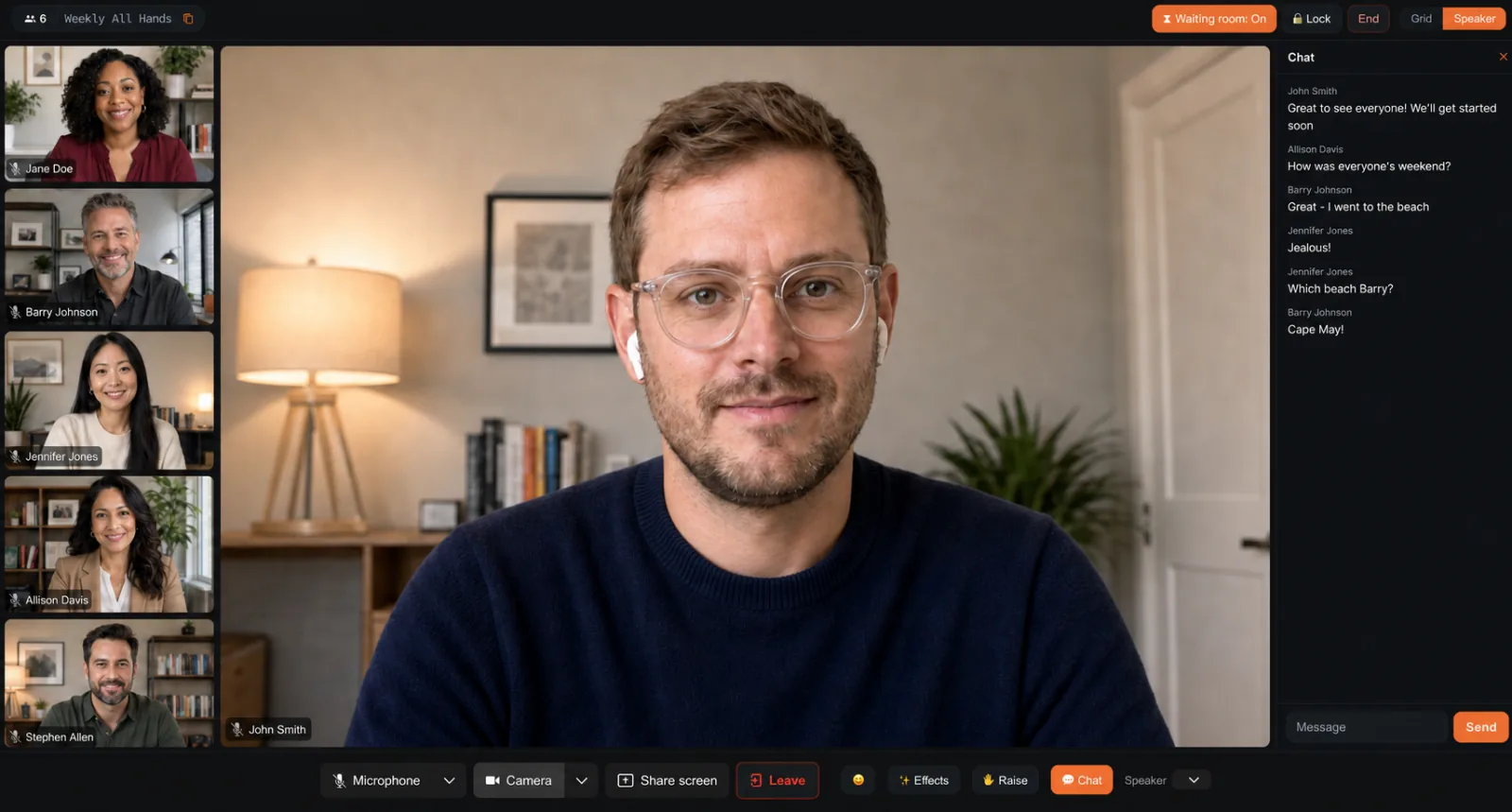
Share a screen, window, or tab with audio. Shares are auto-promoted to the main stage.
In-meeting chat, emoji reactions, and raise-hand with an ordered queue.
Admit guests one by one or all at once. Lock the room when everyone's in.
Mute, remove, stop shares, end for all. Enforced on the server, not the honor system.
Client-side background effects with all ML assets served from your own origin.
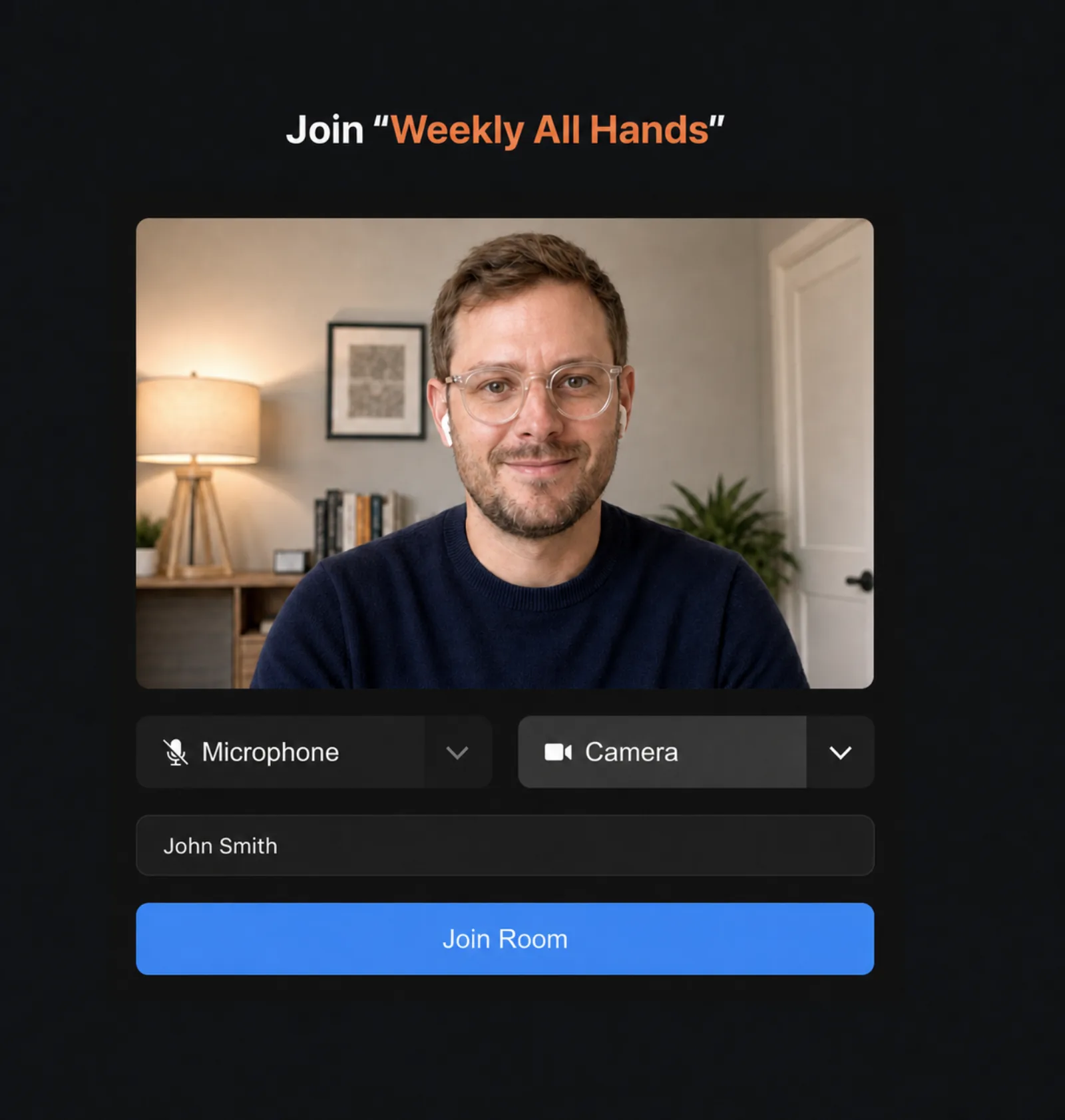
Unguessable, expiring, revocable links. Guests join from a browser. No accounts, no installs.
Promote co-hosts mid-call and pre-create rooms for calendar invites.
For a 200-person company, per-seat conferencing runs tens of thousands of dollars a year, every year. Self-hosting Hearth costs a one-time license plus the modest cloud servers you already know how to run.
$40,000+ /year, forever*
$1,999 $999 once Β· introductory price
*Illustrative: 200 seats at ~$17/seat/month averaged across mainstream business tiers. Your quote will vary; the βforeverβ part won't. At 100 people, Hearth is about $20 per seat, once, versus ~$220 per seat every year, and it pays for itself in roughly five weeks. Plus the modest servers you run it on.
If your team can run Docker, your team can run Hearth. Single-box to start; scale out to multi-node when you need it.
Any Linux host with a public IP. Two DNS records, a handful of open ports.
Set your secrets in .env, then docker compose up -d. TLS certificates are fetched automatically.
Create a meeting, send the invite link. Guests join from any modern browser. Nothing to install.
Hearth is a self-hosted video conferencing platform: an alternative to Zoom, Microsoft Teams, and Google Meet that you buy once and run on your own servers. It supports meetings of up to 100 participants with screen sharing, chat, emoji reactions, raise-hand, waiting rooms, host controls, and background blur.
Hearth costs $1,999 as a flat, one-time license (currently $999 at the introductory price). That covers unlimited seats and all v1 updates and security patches, with a 30-day money-back guarantee. There are no per-seat fees and no subscription. For comparison, mainstream per-seat conferencing costs a 100-person company roughly $20,000β22,000 every year.
Nowhere. Video, audio, chat, and metadata stay entirely on infrastructure you control. Hearth contains no third-party analytics, no telemetry, and no phone-home. The software never contacts us after you deploy it.
A Linux host with a public IP, Docker, and two DNS records. A single
docker compose up brings up the app, the media server, TURN, and the
database, with TLS certificates fetched automatically. Most teams are running
their first call within an hour, and a multi-node configuration is included for
scaling out.
No. Guests join from a link in any modern browser: Chrome, Edge, Firefox, or Safari. There is nothing to install and no account to create. Invite links are unguessable, can expire, and can be revoked.
Three ways: you pay once instead of per seat per month; every call runs through your servers instead of a vendor's cloud; and data residency, retention, and compliance are under your control because you own the whole stack.
This site uses analytics and may use cookies and similar technologies to measure traffic and improve the experience. See our Privacy Policy.